

Introduction
Traveling for the first time is an exciting milestone that opens the door to unforgettable experiences, new cultures, and lifelong memories. However, it can also feel overwhelming if you don’t know where to begin. From choosing the right destination to booking flights, packing efficiently, and staying safe, every decision plays an important role in ensuring a smooth journey. This Complete Travel Guide for First-Time Travelers is designed to help beginners confidently prepare for their first adventure without unnecessary stress.
Whether you’re planning a weekend getaway, a family vacation, or an international trip, proper planning can make all the difference. Understanding travel basics before you leave home saves time, reduces expenses, and helps you avoid common mistakes that many first-time travelers make. Throughout this Complete Travel Guide for First-Time Travelers, you’ll learn practical strategies for planning, budgeting, packing, navigating airports, staying safe, and enjoying every moment of your trip. By following these proven tips, you’ll be ready to travel with confidence and create experiences you’ll never forget.
What is Complete Travel Guide for First-Time Travelers?
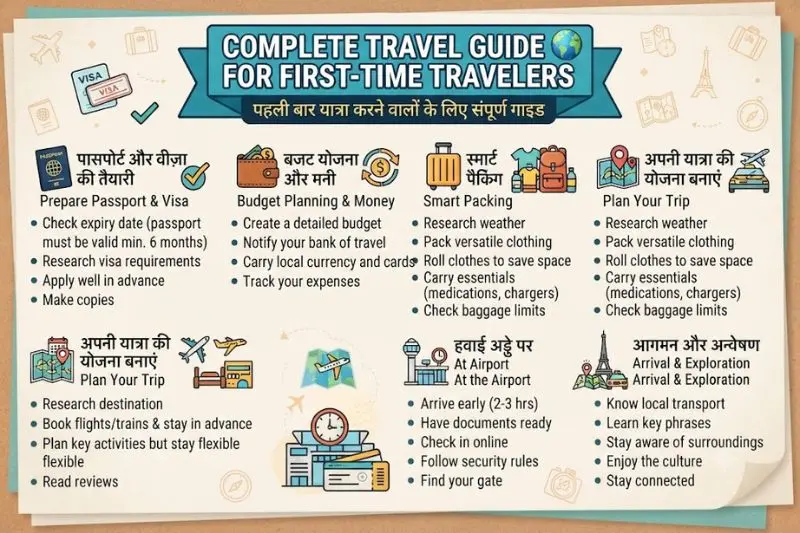
A Complete Travel Guide for First-Time Travelers is a comprehensive resource that explains everything a beginner needs to know before taking a trip. Instead of focusing only on destinations, it covers the entire travel process from planning to returning home.
A good travel guide includes information about:
- Choosing the right destination
- Creating a realistic travel budget
- Booking flights and accommodation
- Preparing travel documents
- Packing efficiently
- Airport procedures
- Local transportation
- Safety precautions
- Money management
- Travel etiquette
- Emergency planning
The purpose is to eliminate confusion and help travelers feel prepared for every stage of their journey.
Why is Complete Travel Guide for First-Time Travelers Important?
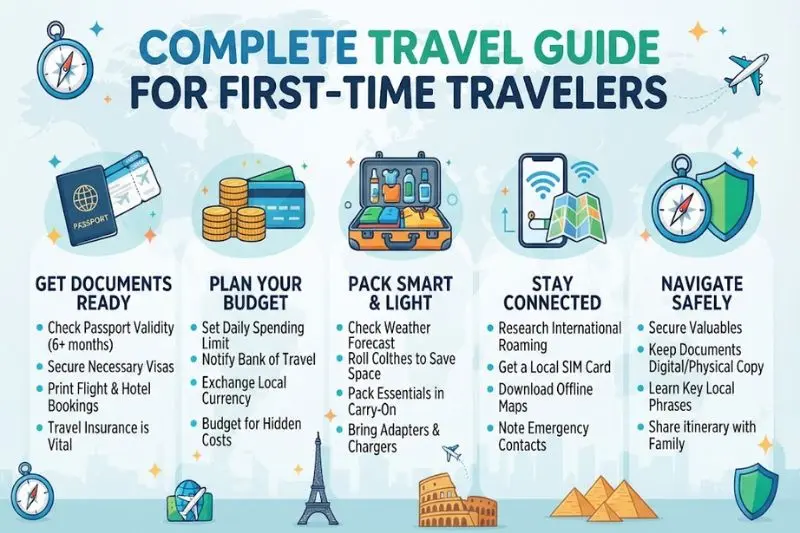
Traveling without preparation often leads to unnecessary stress, unexpected expenses, and avoidable problems. A well-planned trip allows you to focus on enjoying your destination instead of solving preventable issues.
Here are several reasons why this guide is important:
- Reduces travel anxiety
- Helps create realistic budgets
- Prevents overpacking
- Improves travel safety
- Saves time during planning
- Helps avoid common travel scams
- Makes airport procedures easier
- Ensures important documents are prepared
- Improves overall travel experience
- Builds confidence for future trips
For first-time travelers, proper preparation transforms an intimidating experience into an enjoyable adventure.
Detailed Step-by-Step Guide
Step 1: Choose the Right Destination
Start by selecting a destination that matches your budget, interests, and comfort level.
Consider:
- Weather
- Language
- Safety
- Transportation
- Tourist attractions
- Cost of living
- Visa requirements
Beginners often enjoy destinations that have excellent tourist infrastructure, English-speaking locals, and reliable public transportation.
Step 2: Set Your Travel Budget
Budgeting is one of the most important parts of travel planning.
Include expenses such as:
- Flights
- Hotels
- Food
- Transportation
- Activities
- Shopping
- Travel insurance
- Emergency funds
A realistic budget prevents financial stress during your trip.
Example:
If your total budget is $1,000:
- Flights: $350
- Hotel: $300
- Food: $150
- Transportation: $80
- Activities: $70
- Emergency: $50
Step 3: Check Passport and Visa Requirements
Before booking anything, make sure your passport is valid.
Some countries require passports to remain valid for at least six months after your travel dates.
Also verify:
- Visa requirements
- Entry permits
- Vaccination requirements
- Customs regulations
Preparing documents early prevents last-minute complications.
Step 4: Book Flights Early
Booking flights in advance often helps you secure better prices.
Compare:
- Flight duration
- Layovers
- Airline reviews
- Baggage allowance
- Cancellation policies
Morning flights usually experience fewer delays than late evening departures.
Step 5: Reserve Accommodation
Choose accommodation based on:
- Budget
- Safety
- Distance from attractions
- Public transportation
- Guest reviews
- Amenities
Popular accommodation options include:
- Hotels
- Hostels
- Guesthouses
- Vacation rentals
- Boutique hotels
Reading recent reviews helps avoid unpleasant surprises.
Step 6: Purchase Travel Insurance
Many beginners overlook travel insurance.
A quality travel insurance policy can cover:
- Medical emergencies
- Lost luggage
- Flight cancellations
- Trip interruptions
- Emergency evacuation
The small upfront cost can save thousands in unexpected situations.
Step 7: Create a Travel Itinerary
A flexible itinerary keeps your trip organized.
Include:
- Flight information
- Hotel address
- Daily activities
- Emergency contacts
- Transportation plans
- Restaurant ideas
Leave some free time to explore spontaneously.
Step 8: Pack Smart
Packing efficiently makes traveling easier.
Essentials include:
- Passport
- Identification
- Phone charger
- Power bank
- Clothing
- Comfortable shoes
- Toiletries
- Medications
- Travel adapter
- Copies of important documents
Pack only what you’ll actually use.
A carry-on bag should contain valuable items and one extra outfit in case checked luggage is delayed.
Step 9: Learn Airport Procedures
Understanding airports before your first trip reduces stress.
Basic process:
- Arrive early.
- Check in.
- Drop baggage.
- Pass security screening.
- Find your departure gate.
- Board when called.
Keep travel documents easily accessible throughout the process.
Step 10: Stay Safe During Your Trip
Safety should always remain a priority.
Best practices include:
- Keep valuables secure.
- Avoid displaying large amounts of cash.
- Share your itinerary with family.
- Stay aware of your surroundings.
- Use trusted transportation.
- Save emergency phone numbers.
Simple precautions significantly reduce travel risks.
Step 11: Manage Your Money
Avoid carrying all your money in one place.
Instead:
- Carry some cash
- Use debit cards
- Keep emergency funds separate
- Notify your bank before international travel
- Monitor your spending daily
This approach minimizes financial problems if something goes wrong.
Step 12: Respect Local Culture
Every destination has unique customs and traditions.
Research:
- Appropriate clothing
- Greeting customs
- Religious practices
- Photography rules
- Dining etiquette
- Local laws
Showing respect creates positive interactions with local communities.
Benefits of Complete Travel Guide for First-Time Travelers
Following a structured travel guide provides numerous advantages.
- Reduces travel anxiety
- Builds confidence
- Saves money
- Improves organization
- Helps avoid travel mistakes
- Enhances safety
- Encourages responsible tourism
- Makes packing easier
- Improves time management
- Creates a more enjoyable travel experience
- Reduces unexpected expenses
- Helps travelers make informed decisions
Disadvantages / Risks
Although travel is rewarding, there are challenges to prepare for.
- Unexpected flight delays
- Lost luggage
- Travel scams
- Language barriers
- Currency exchange issues
- Weather disruptions
- Homesickness
- Health concerns
- Budget overruns
- Cultural misunderstandings
Most of these risks can be minimized with careful planning.
Common Mistakes to Avoid
Many beginners repeat the same travel mistakes.
Avoid these common errors:
- Booking flights without comparing prices
- Forgetting passport expiration dates
- Ignoring visa requirements
- Overpacking luggage
- Not purchasing travel insurance
- Carrying too much cash
- Failing to research local customs
- Booking accommodation without reading reviews
- Not informing banks about international travel
- Skipping emergency planning
- Following unrealistic travel schedules
- Forgetting backup copies of important documents
Learning from these mistakes helps create a much smoother travel experience.
FAQs
How far in advance should first-time travelers plan a trip?
Ideally, begin planning at least two to six months before departure. This provides enough time to compare prices, obtain visas, renew passports if necessary, and secure better accommodation deals.
Is travel insurance really necessary?
Yes. Travel insurance protects against medical emergencies, cancellations, lost baggage, and unexpected travel interruptions. It provides financial protection and peace of mind throughout your journey.
How much money should I carry while traveling?
Carry only enough cash for immediate expenses while keeping most funds in secure cards or digital payment methods. Always have an emergency reserve stored separately.
What should first-time travelers pack?
Essentials include:
Passport
Identification
Tickets
Clothes
Toiletries
Medications
Chargers
Power bank
Comfortable shoes
Copies of travel documents
Avoid packing unnecessary items.
How can I stay safe while traveling alone?
Stay aware of your surroundings, avoid isolated areas at night, keep emergency contacts available, use trusted transportation, and inform family or friends about your location regularly.
What’s the biggest mistake first-time travelers make?
Poor planning is the most common mistake. Many travelers underestimate budgeting, ignore visa requirements, overpack luggage, or fail to research their destination properly.
Expert Tips & Bonus Points
Experienced travelers often follow habits that make every trip easier.
- Book flights during weekdays when possible.
- Download offline maps before departure.
- Carry digital copies of important documents.
- Learn a few basic local phrases.
- Keep a reusable water bottle.
- Use luggage tags with contact information.
- Wear comfortable clothing during flights.
- Keep valuables in your carry-on bag.
- Check weather forecasts before packing.
- Always have a backup payment method.
- Arrive at airports early, especially for international flights.
- Stay flexible because unexpected changes are part of travel.
Bonus Tip:
Instead of trying to visit every attraction, focus on enjoying a few places deeply. Quality experiences often create stronger memories than rushing through a long sightseeing checklist.
Conclusion
Your first journey doesn’t have to be stressful or confusing. With proper planning, realistic expectations, and a willingness to learn, traveling becomes one of the most rewarding experiences you’ll ever have. This Complete Travel Guide for First-Time Travelers covers every essential step—from selecting the right destination and managing your budget to packing efficiently, navigating airports, staying safe, and respecting local cultures. Each stage contributes to a smoother and more enjoyable travel experience, helping you avoid common pitfalls while making the most of your adventure.
As you gain experience, you’ll naturally develop your own travel style and preferences. Every trip teaches valuable lessons that make future journeys even easier and more enjoyable. Whether you’re exploring a nearby city or embarking on your first international vacation, careful preparation is the key to confidence and peace of mind. Use this Complete Travel Guide for First-Time Travelers as your trusted companion, and you’ll be well-equipped to handle challenges, embrace new opportunities, and create unforgettable memories. Travel is more than reaching a destination—it’s about discovering new perspectives, building confidence, and enjoying every step of the journey.
