
Introduction
Planning a city vacation can be exciting, but it can also feel overwhelming when there are countless attractions, restaurants, museums, and entertainment options to choose from. A well-organized City Travel Guide: Top Attractions and Itinerary helps travelers make the most of their time while avoiding common travel mistakes. Whether you’re visiting a famous capital or exploring a charming small city, having a structured itinerary ensures you experience the highlights without feeling rushed.
This guide is designed for beginners and intermediate travelers who want practical advice before their next adventure. You’ll learn how to choose must-see attractions, organize your daily schedule, save money, avoid tourist traps, and create unforgettable memories. Throughout this article, you’ll discover proven travel planning techniques, expert recommendations, and useful tips that make every city trip smoother and more enjoyable.
What is City Travel Guide: Top Attractions and Itinerary?

A City Travel Guide: Top Attractions and Itinerary is a comprehensive travel plan that helps visitors explore a city efficiently. It combines information about famous landmarks, hidden gems, transportation, accommodation, food, shopping, and daily schedules into one organized resource.
Instead of wandering without direction, travelers can follow a planned itinerary that balances sightseeing, relaxation, and local experiences. A good city travel guide includes:
- Popular tourist attractions
- Historical landmarks
- Museums and cultural sites
- Local restaurants
- Shopping districts
- Transportation options
- Suggested daily itineraries
- Budget recommendations
- Safety advice
With careful planning, travelers maximize their experience while minimizing stress.
Why is City Travel Guide: Top Attractions and Itinerary Important?
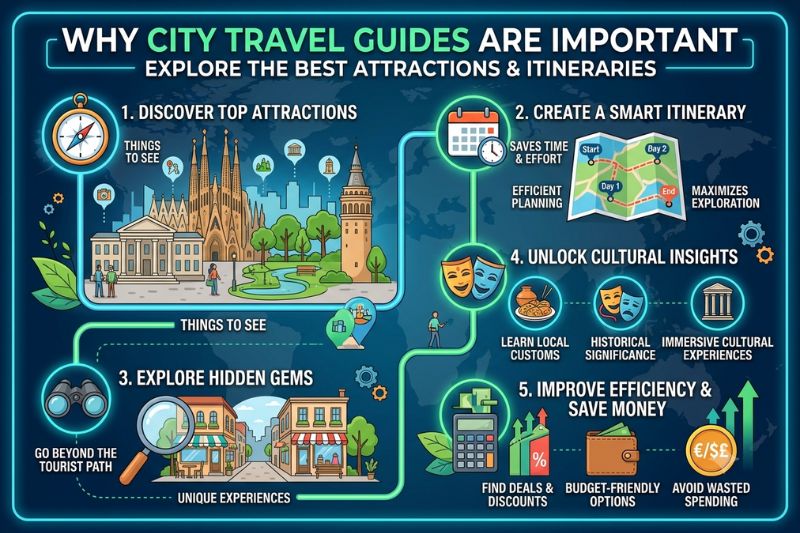
A travel itinerary does much more than organize your vacation. It saves time, reduces expenses, and ensures you don’t miss important attractions.
Here are several reasons why it matters:
- Helps prioritize famous attractions.
- Saves valuable vacation time.
- Prevents unnecessary transportation costs.
- Makes budgeting easier.
- Reduces travel stress.
- Improves overall travel experience.
- Helps discover hidden local attractions.
- Keeps daily activities balanced.
Without a travel guide, visitors often waste hours deciding where to go next.
Detailed Step-by-Step Guide
Step 1: Research the Destination
Before booking your trip, spend time learning about the city.
Research:
- Weather conditions
- Best travel season
- Local transportation
- Currency
- Language
- Popular attractions
- Safety information
- Local customs
Knowing these basics helps avoid surprises.
Step 2: Choose Your Top Attractions
Every city has iconic landmarks that deserve a place on your itinerary.
Examples include:
- Historical monuments
- Museums
- Parks
- Observation decks
- Churches
- Local markets
- Waterfronts
- Art galleries
Select attractions based on your interests rather than trying to visit everything.
Step 3: Plan Your Daily Itinerary
Avoid filling every hour with activities.
A balanced schedule could look like this:
Morning
- Visit major landmarks.
- Take photos before crowds arrive.
Afternoon
- Enjoy lunch at a local restaurant.
- Explore museums or shopping areas.
Evening
- Walk through popular neighborhoods.
- Watch sunset viewpoints.
- Try local street food.
Leaving some free time allows for spontaneous discoveries.
Step 4: Book Tickets in Advance
Many famous attractions sell out during peak seasons.
Booking early provides:
- Lower prices
- Guaranteed entry
- Less waiting time
- Better planning
Advance reservations are especially helpful for museums and observation decks.
Step 5: Learn Public Transportation
Public transportation is often the fastest way to explore a city.
Options may include:
- Metro
- Subway
- Buses
- Trams
- Ferries
- Bicycle rentals
Buying daily or weekly travel passes can reduce transportation expenses.
Step 6: Experience Local Food
Food is one of the highlights of every city trip.
Try:
- Local specialties
- Street food
- Traditional desserts
- Regional drinks
- Family-owned restaurants
Avoid eating every meal near major tourist attractions because prices are often higher.
Step 7: Include Hidden Gems
The most memorable travel experiences often happen away from crowded tourist spots.
Hidden gems include:
- Quiet neighborhoods
- Local parks
- Independent cafés
- Small museums
- Scenic viewpoints
- Weekend markets
These places offer authentic experiences and fewer crowds.
Step 8: Stay Flexible
Unexpected weather, transportation delays, or local events may require adjustments.
Always keep:
- Backup attractions
- Indoor alternatives
- Extra travel time
- Emergency contacts
Flexibility reduces frustration.
Sample Three-Day City Itinerary
Day 1
- Visit the city’s historic center.
- Explore the main museum.
- Enjoy lunch at a local restaurant.
- Walk through nearby parks.
- Watch sunset from a viewpoint.
Day 2
- Visit cultural attractions.
- Explore shopping districts.
- Try local street food.
- Visit an art gallery.
- Experience local nightlife.
Day 3
- Explore hidden neighborhoods.
- Visit local markets.
- Relax at a public garden.
- Take memorable photographs.
- Buy souvenirs before departure.
Benefits of City Travel Guide: Top Attractions and Itinerary
A carefully planned city guide offers many advantages.
- Saves travel time
- Reduces unnecessary expenses
- Improves trip organization
- Helps discover hidden attractions
- Prevents missing important landmarks
- Makes transportation easier
- Encourages better budgeting
- Creates a stress-free experience
- Improves travel safety
- Provides memorable experiences
- Maximizes every vacation day
- Makes family travel easier
Disadvantages / Risks
Although planning is helpful, there are a few potential drawbacks.
- Overplanning can reduce spontaneity.
- Tight schedules may become stressful.
- Weather may disrupt plans.
- Attraction closures can affect itineraries.
- Peak-season crowds may increase waiting times.
- Popular areas may be more expensive.
- Unexpected transportation delays may occur.
- Tourist traps can waste money.
Fortunately, these risks can be minimized with flexible planning.
Common Mistakes to Avoid
Many travelers make avoidable mistakes during city vacations.
Here are the most common ones:
Trying to See Everything
Attempting to visit every attraction often leads to exhaustion.
Ignoring Local Transportation
Walking everywhere isn’t always practical.
Learn the city’s transportation system before arrival.
Booking Too Late
Hotels and attraction tickets become more expensive closer to travel dates.
Skipping Local Food
International fast food is available almost everywhere.
Instead, enjoy authentic local cuisine.
Packing Too Much
Heavy luggage slows you down during city exploration.
Pack only essential items.
Ignoring Weather Forecasts
Unexpected rain or heat can affect sightseeing plans.
Always check the forecast before leaving.
Not Budgeting Properly
Unexpected expenses can quickly add up.
Plan daily spending limits.
FAQs
What should be included in a city travel itinerary?
A complete itinerary should include accommodation, transportation, sightseeing, restaurants, shopping areas, emergency contacts, and free time for relaxation.
How many attractions should I visit in one day?
What should be included in a city travel itinerary?
A complete itinerary should include accommodation, transportation, sightseeing, restaurants, shopping areas, emergency contacts, and free time for relaxation.
Is it better to walk or use public transportation?
That depends on the city’s layout. Walking is excellent for compact city centers, while public transportation is ideal for longer distances.
How can I save money during a city trip?
Book accommodations early, use public transportation, eat at local restaurants, purchase attraction passes when available, and travel during the off-season.
Should I book attractions before arriving?
Yes. Popular attractions often sell out, especially during holidays and weekends. Early booking also helps you plan your itinerary more effectively.
How much time should I spend in one city?
Most travelers enjoy spending three to five days exploring a city. Larger destinations with numerous attractions may require a full week.
How do I choose the best attractions?
Focus on your personal interests. History lovers may enjoy museums and monuments, while food enthusiasts may prefer local markets and culinary tours.
Is traveling during the off-season a good idea?
Yes. Off-season travel usually means lower hotel prices, fewer crowds, shorter waiting times, and a more relaxed sightseeing experience.
Expert Tips & Bonus Points
Travel experts recommend following these practical strategies:
- Start sightseeing early in the morning.
- Carry a reusable water bottle.
- Wear comfortable walking shoes.
- Download offline city maps.
- Keep digital copies of important documents.
- Learn a few local phrases.
- Carry a portable phone charger.
- Use public transportation whenever possible.
- Leave room for unexpected discoveries.
- Take breaks to avoid travel fatigue.
- Visit famous attractions on weekdays if possible.
- Explore residential neighborhoods for authentic experiences.
- Keep emergency cash available.
- Respect local customs and traditions.
- Capture memories but also enjoy the moment without constantly using your phone.
These small habits often make the difference between a stressful vacation and a truly memorable one.
Conclusion
A thoughtfully prepared City Travel Guide: Top Attractions and Itinerary transforms an ordinary vacation into an organized, enjoyable, and memorable experience. Instead of wasting valuable time deciding where to go next, you can confidently explore famous landmarks, hidden neighborhoods, cultural attractions, local restaurants, and scenic viewpoints. Proper planning also helps you stay within your budget, avoid unnecessary stress, and experience the city at a comfortable pace. Whether you’re traveling solo, with friends, or as a family, a balanced itinerary ensures that every day offers something exciting while still allowing time to relax and appreciate your surroundings.
Remember that the best trips combine planning with flexibility. Research your destination, prioritize your favorite attractions, and leave space for unexpected discoveries that often become the highlights of any journey. By following the strategies outlined in this guide, you’ll be well-prepared to enjoy a smoother, safer, and more rewarding urban adventure. No matter which destination you choose, a carefully designed itinerary will help you create lasting memories, experience local culture more deeply, and return home with stories worth sharing for years to come.
